

How Statement Stone Changes a Kitchen: One Design, Five Material Directions
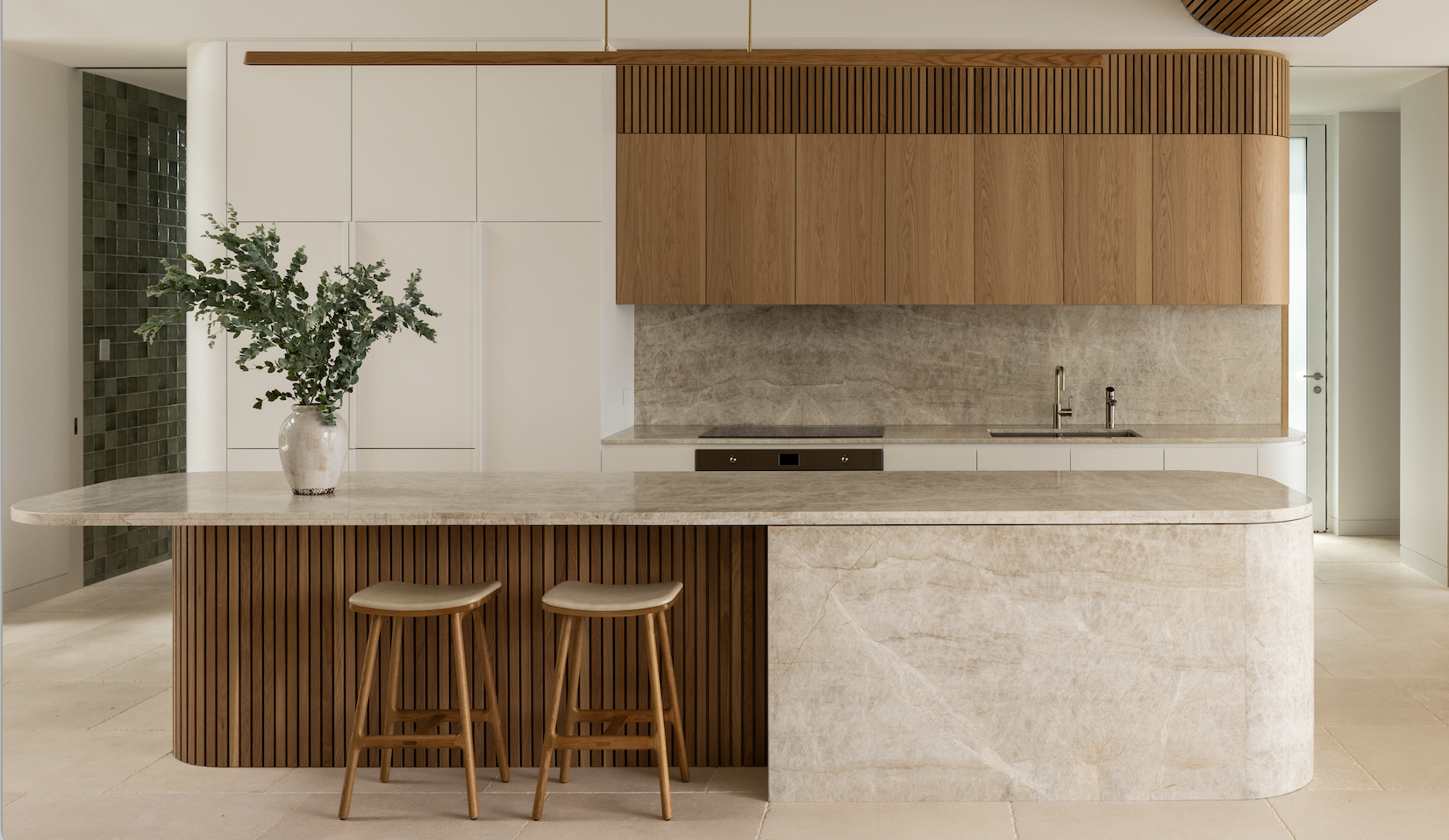
Statement stone is everywhere right now, and everyone seems to have an opinion.
Over the past year, we’ve seen a noticeable shift in kitchen design and the appetite for aesthetics that are less about safe or neutral selections and far more drawn to materials with personality : bold marble, expressive quartzites, richly veined surfaces that feel considered rather than decorative.
But here’s the thing we always explain : statement stone isn’t just a finish decision, it’s a design direction.
Why Statement Stone Is Having a Moment
There are a few reasons statement stone feels particularly relevant right now.
Firstly, kitchens have become far more integrated into the overall architecture of the home. They’re not separate rooms, they’re part of open living spaces - which means every decision carries more visual weight.
Secondly, we see clients moving away from trend-driven selections and looking instead for materials that feel enduring and expressive at the same time.
And finally, we’re seeing a growing appreciation for natural variation. People are less interested in perfection and more drawn to texture, depth and individuality.
But statement stone only works when the aesthetic direction is clear. Without that clarity, it can overwhelm rather than elevate a space.
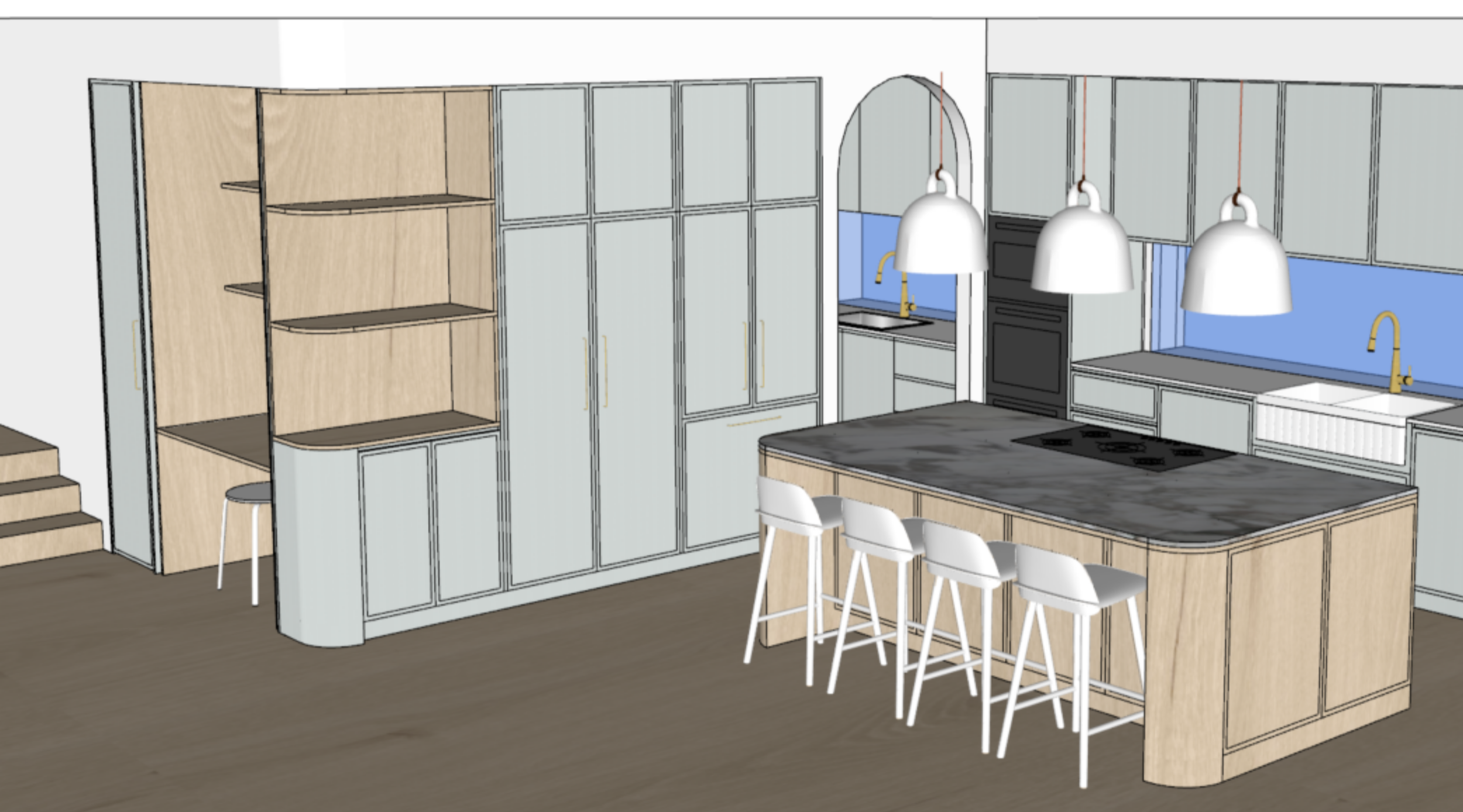
To illustrate this properly, we recently tested five different material palettes on the same kitchen. The layout and dimensions remained exactly the same. The only thing we changed was the materiality (and some lighting and stools).
We used AI visualisation to explore this exercise - not to replace design thinking, but to clearly show how dramatically material choices shape the outcome. The mood. The atmosphere.
The results were quite striking.
The Experiment | One Kitchen - Five Outcomes
For this study, we took one of our Heliconia kitchen designs (3D model above) and applied five different palettes to create five different kitchens. The joinery, and proportions stayed constant so the effect of materiality could be seen clearly.
Below is how each palette changed the mood entirely.
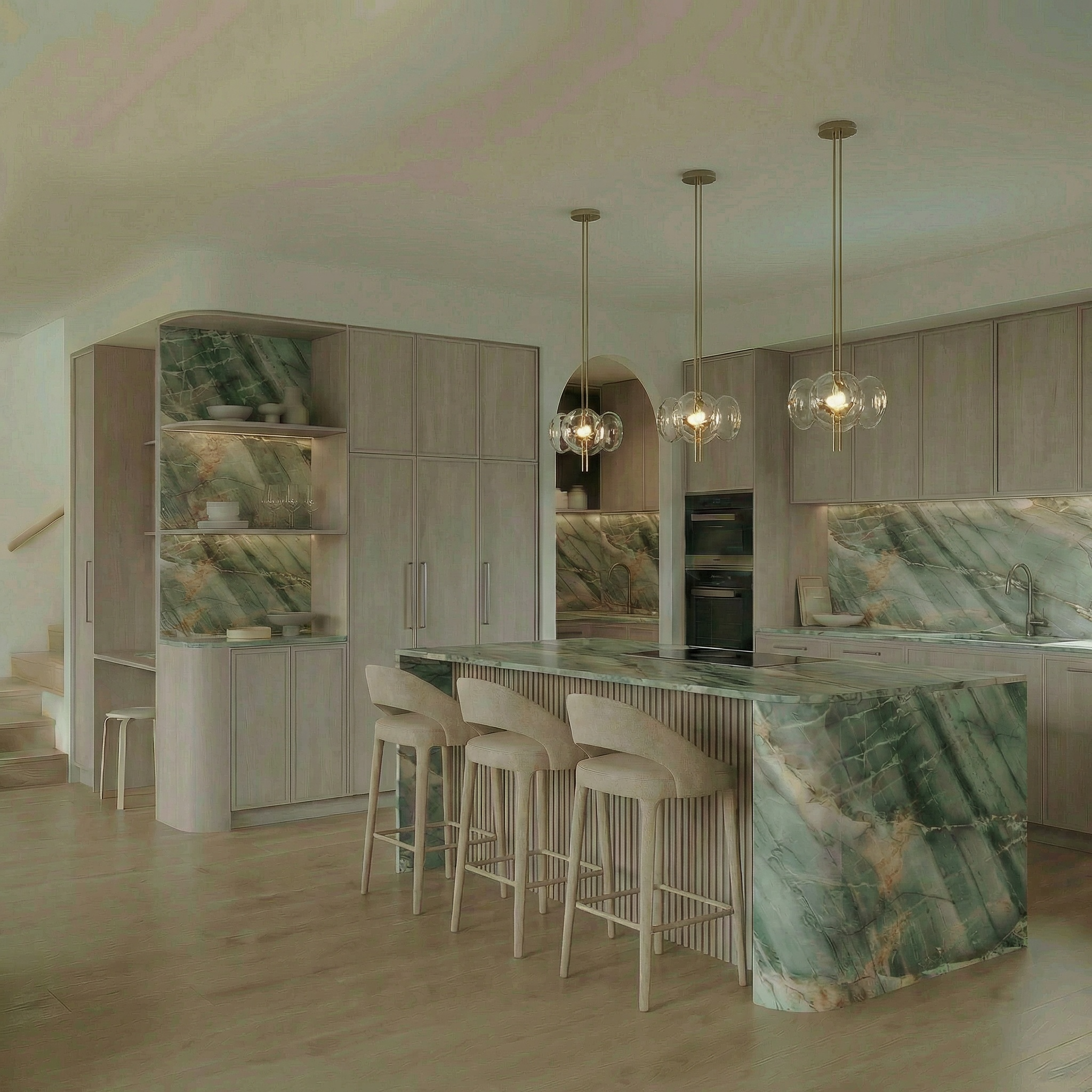
Palette One | Quiet Luxury - Da Vinci Quartzite
Materials:
• Sydney Stone Gallery Da Vinci Polished Quartzite
• Limewash Timber Cabinetry, inspired by Farmers Doors Limewash Finish.
• Satin Nickel Hardware and Tapware
This palette feels calm, refined and architectural. The quartzite brings softness rather than drama, yet the depth of colour provides undeniable character, overall allowing the space to feel effortless and resolved.
The scheme is subtle, layered and quietly confident.
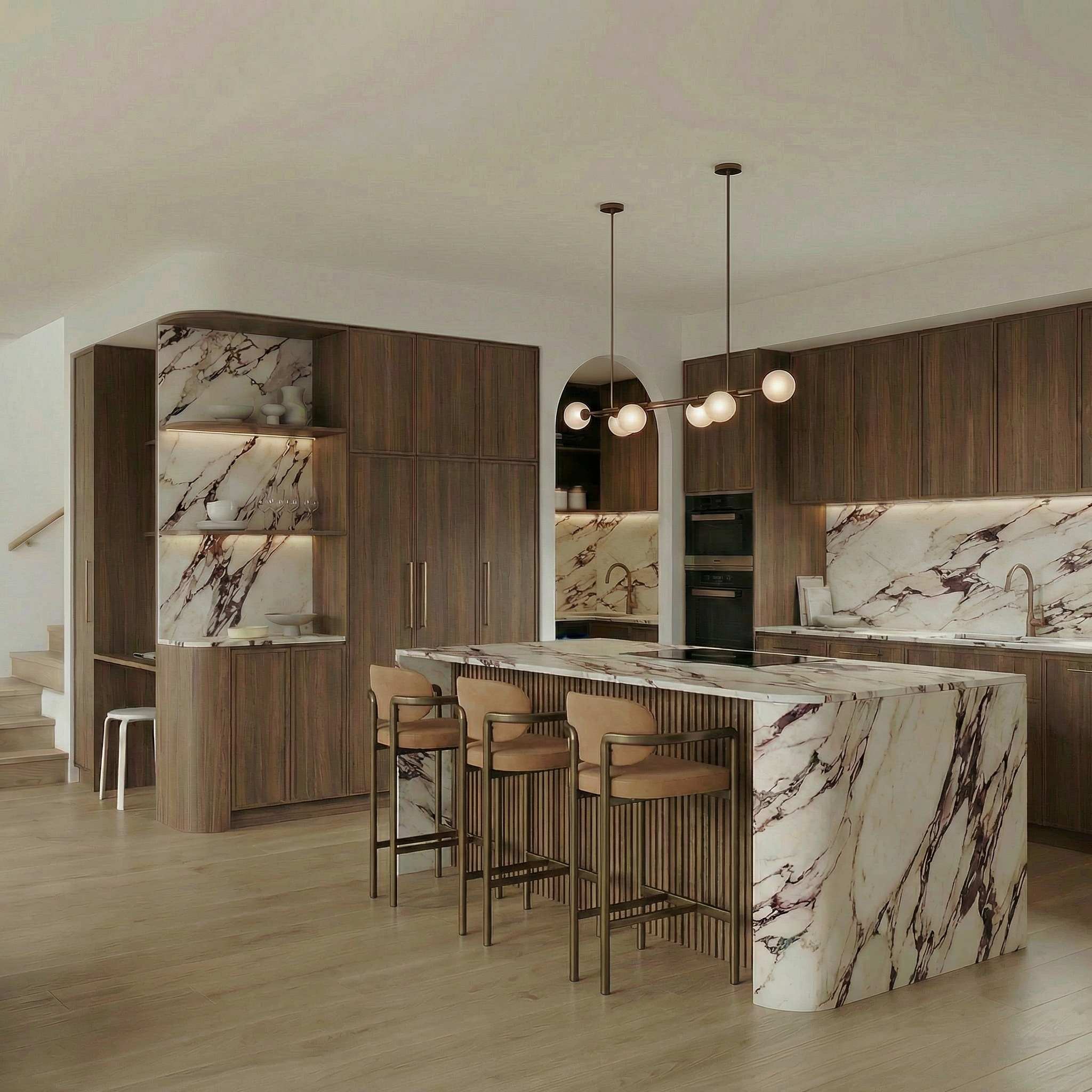
Palette Two | Expressive Contrast - Calcutta Viola
Materials:
• Talostone Calacatta Viola
• Walnut Nataio Cabinetry by Polytec
• Aged Brass Hardware + Detailing
This version is far more graphic. The bold burgundy veining introduces contrast and energy, while the walnut grounds the scheme and keeps it warm and chic.
It feels deliberate, confident and highly directional, perfect when you want the kitchen to feel like a focal point.
Palette Three | Statement Led - Natroccia + Verdant
Materials :
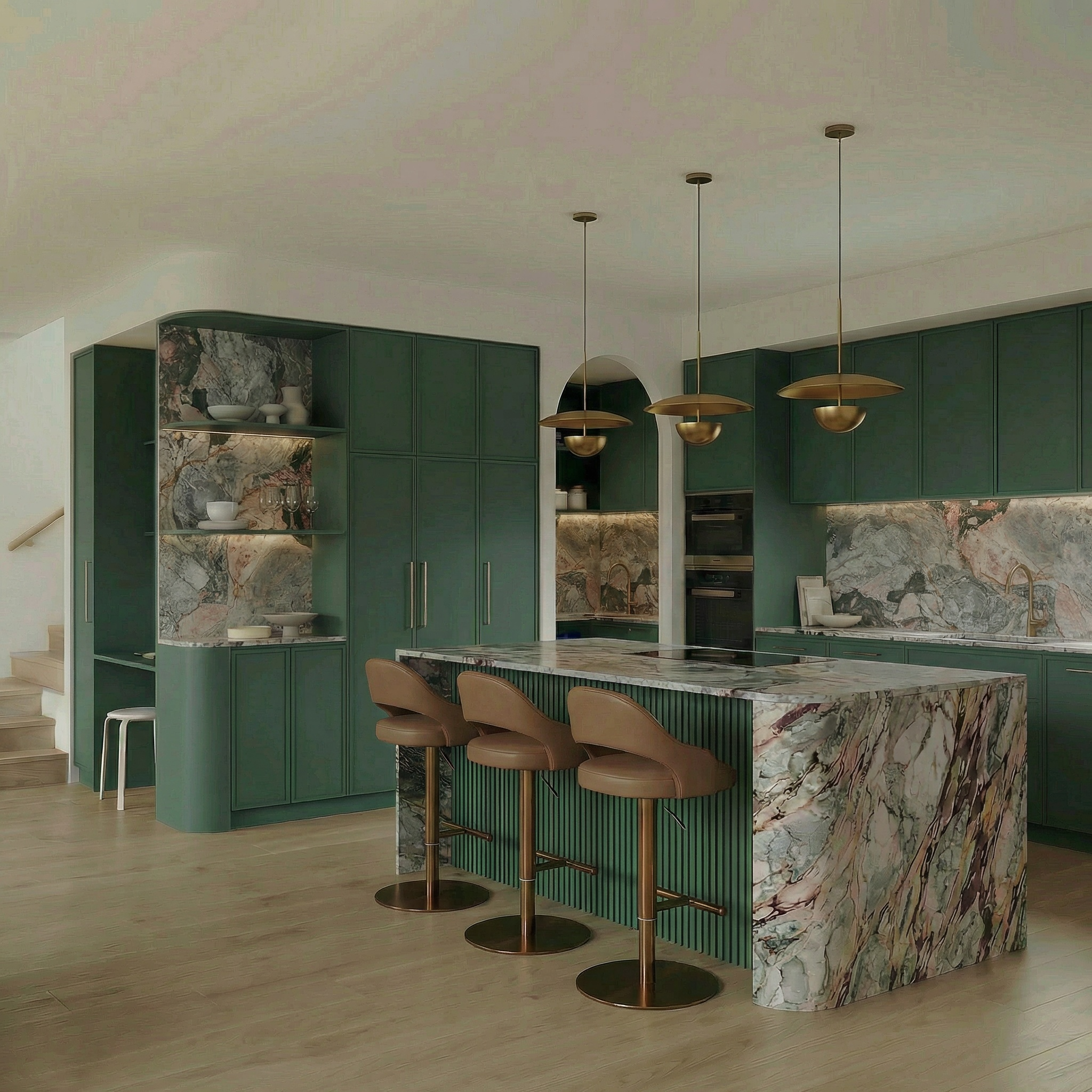
• Talostone Natroccia - Four Seasons
• Polyurethane Cabinetry in Porter’s Paint - Verdant
• Gold / Brass Hardware
This palette is unapologetically bold. The combination of rich colour and expressive stone makes the kitchen feel dramatic and highly individual.
It’s not for everyone - but when it’s right and the tone of the cabinetry complements the stone detailing and its undertones, it’s incredibly powerful.
Palette Four | Tone Rich Drama - Pierre de Bordeaux
Materials:
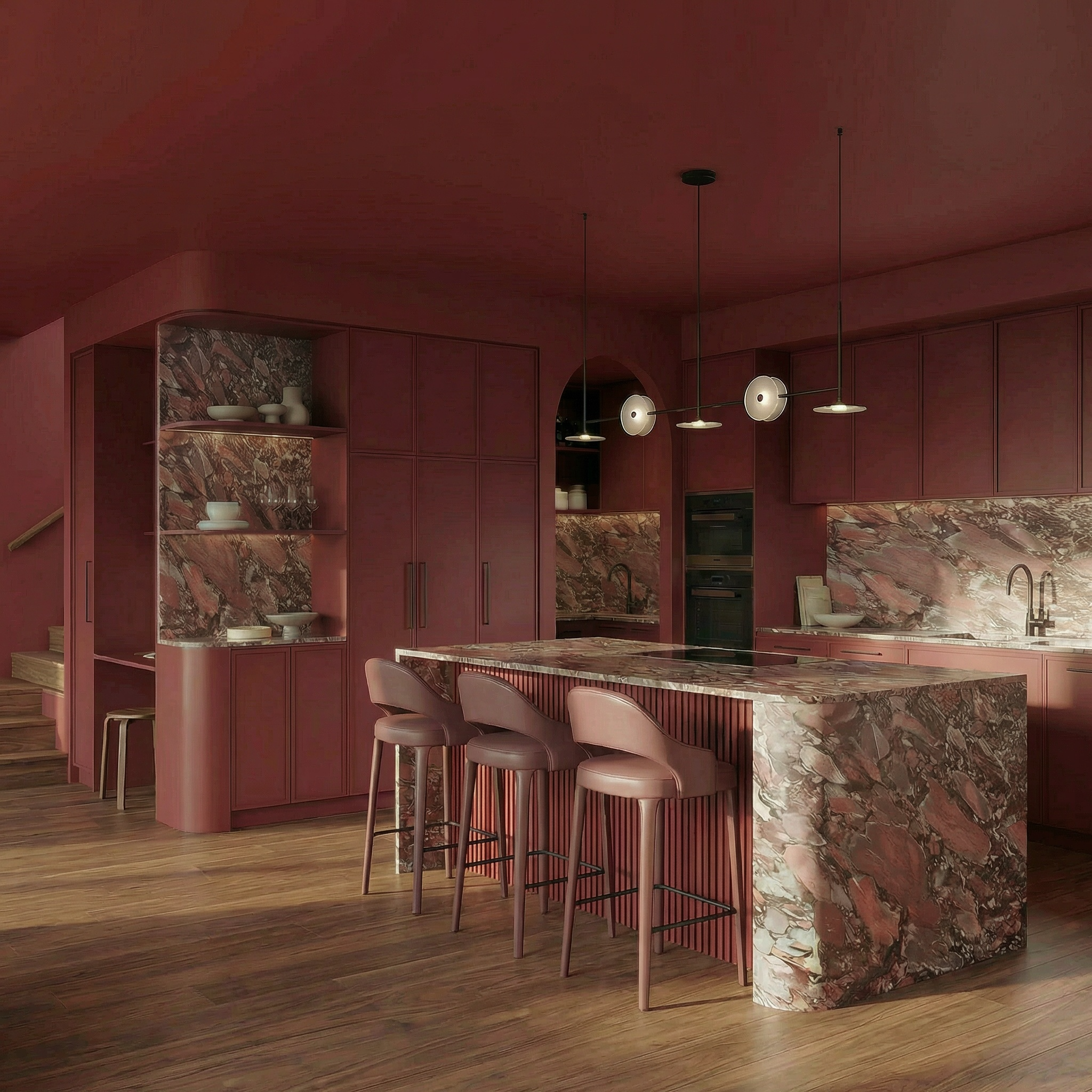
• Anterior XL Pierre de Bordeaux
• Dulux Very Cherry Cabinetry
• Bronze Hardware and Tapware
This is the most immersive palette. The layering between the stone and cabinetry creates a cocooning effect that feels atmospheric and sophisticated.
It works particularly well in homes where warmth and depth are priorities. The coloured ceiling adds to the experience.
Palette Five | Layeres + Architectural - Verde Quartzite
Materials:
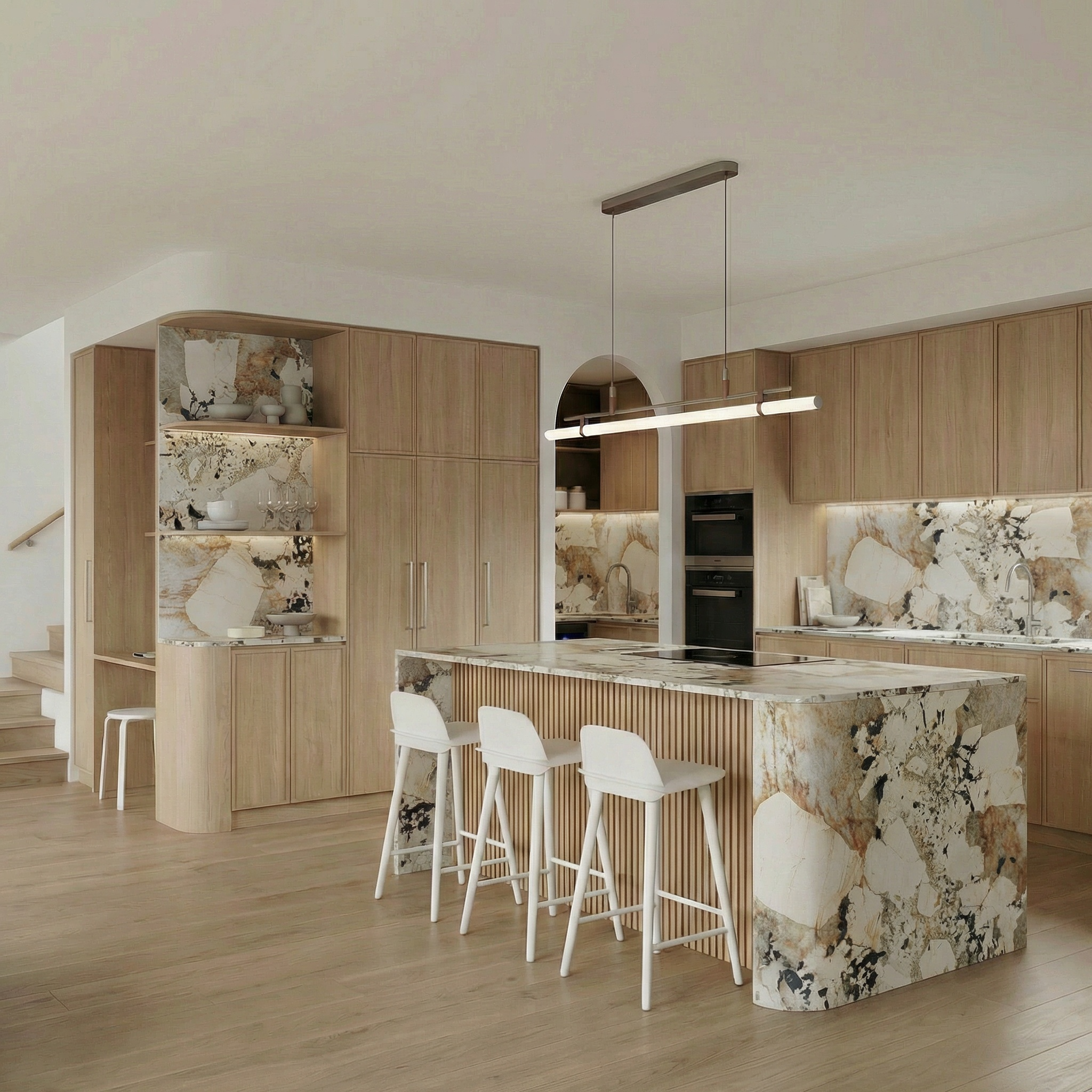
• Laminam Patagonia Caress
• Polytec Boston Oak Cabinetry
• Brushed Platinum Hardware
This direction feels layered and atmospheric. The natural variation of the stone introduces depth without heaviness, while the warmer tones keep the space balanced.
It’s one of our favourites for homes where the kitchen needs to feel connected to surrounding living spaces, as well as to the natural surroundings.
Why we used AI for this Experiment
We’re often asked whether AI replaces traditional design processes.
The answer is no.
We used it here simply as a visual tool to clearly show how dramatically a space can shift when the material palette changes. The underlying design thinking, spatial planning and detailing remain exactly the same.
In many ways, this exercise reinforces the point: materials are never just aesthetic, they define how a space feels.
The Real Takeaway
There isn’t one “right” or “perfect” stone.
But there is a right strategy for using a statement stone. The success of statement stone always comes down to clarity: understanding the architecture, the mood you want to create and how every material works together.
That’s where thoughtful design makes the difference.
If you’re planning a kitchen and considering statement stone, working through the material direction early makes the entire process easier - and the outcome far stronger.
If you’d like to explore what that could look like for your home, we’re always happy to start the conversation.